
Start with one process
Online booking, reminders or a program for one group of patients can each be a first version. You don’t have to replace your clinic system at once.
A smaller first step
Connect bookings, patient services and staff tasks in one platform
In many clinics and health programs, bookings sit in one tool, patient details in another and results in emails and PDFs. Staff retype records, chase missing consent forms and answer the same phone questions all day. We build booking systems, patient portals and staff tools that share one patient record and send reminders on their own. Patient data stays where your rules say it must.
Online booking, reminders or a program for one group of patients can each be a first version. You don’t have to replace your clinic system at once.
A smaller first step
Bookings, forms, consents and results in one place mean less retyping and fewer of the mistakes that come with it.
Shared information
Booking, rescheduling, filling in forms before the visit and seeing results online take routine work off reception.
Patient self-service
Health data is a special category of personal data under GDPR. We plan access rights, logs, hosting and retention in the first week, not just before launch.
Privacy by design
A typical patient journey once the system is in place. Reception only steps in when something is unusual.
From the projects we’ve built in this area.
We built the Mladilekari.sk MVP, a marketplace connecting hospitals with medical students and young doctors, in 6 weeks. The scope was narrow on purpose, with a hospital directory, applications and reviews first. More features followed, built together with the client.
Art. 9
Article 9 of GDPR puts health data in a special category with stricter rules. Which data you store, where it is hosted, who can see it and how long you keep it shape the whole design. Agree it with your data protection officer in the first week, because changing it after launch is expensive.
AI is useful for answering booking questions, drafting reminders and summaries, and sorting incoming messages. Anything that reads like medical advice needs a clinician’s check, and software that diagnoses or recommends treatment can fall under medical device rules. When data can’t go to public AI services, we use self-hosted models.
The people who answer the phone know every exception, from patients without email to family members booking for each other. We put them in the workshop and in the weekly demos, and the system is better for it.
There are good off-the-shelf tools for healthcare. This is how they compare with a custom platform for a clinic, a group of clinics or a health program.
| Booking widget | Clinic management software | Custom platform | |
|---|---|---|---|
| Online booking and reminders | Yes | Yes | Yes |
| Your own services, packages and rules | Partly | Partly | Yes |
| Patient portal with your branding | No | Partly | Yes |
| Programs, studies or wearables | No | Partly | Yes |
| Control over where data is hosted | Partly | Partly | Yes |
| Time to get started | Days | Weeks | 6 weeks–3 months |
What we’ve built for clients in this field.
Program management platform · Slovakia
The problem
A healthtech team needed a platform to run a behavior-change program, with participant management, reporting and connected health data.
What we built
What changed: A platform for running the program, tracking participants and viewing connected health data.
Healthcare talent marketplace · Slovakia
The problem
The team needed an MVP that connected hospitals with medical students and young doctors.
What we built
What changed: A marketplace MVP delivered in 6 weeks.
Healthcare booking and portal rebuild · Slovakia
The problem
The provider needed to rebuild its booking process, customer portal and internal tools to support further growth.
What we built
What changed: A rebuilt booking and portal system with better performance, stability and capacity for growth.
A typical timeline. We confirm yours after the project workshop.
Day 1
30-minute callYour services, your patients and what staff do by hand. You leave with what to build first and a rough price.
Week 1
Workshop and data rulesWe map the patient journey with reception, clinicians and management, and agree where data lives and who sees it. Then a fixed price, before any build starts.
From week 2
Build in 2-week stagesA working demo every week, built and tested on made-up data, not real patient records.
Launch
One service firstWe launch with one service or location, check reminders, consents and access rights, then widen. You own the code, the repositories and the accounts.
+3 months
Free bug fixesThen optional monthly support as you add services and integrations.
Systems we’ve built that are close to this one.
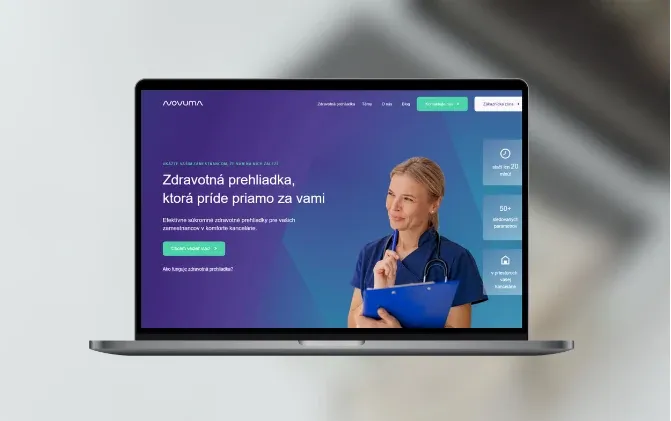
Novuma provides preventive health checkups for thousands of customers and manages their patient records.
Read the case study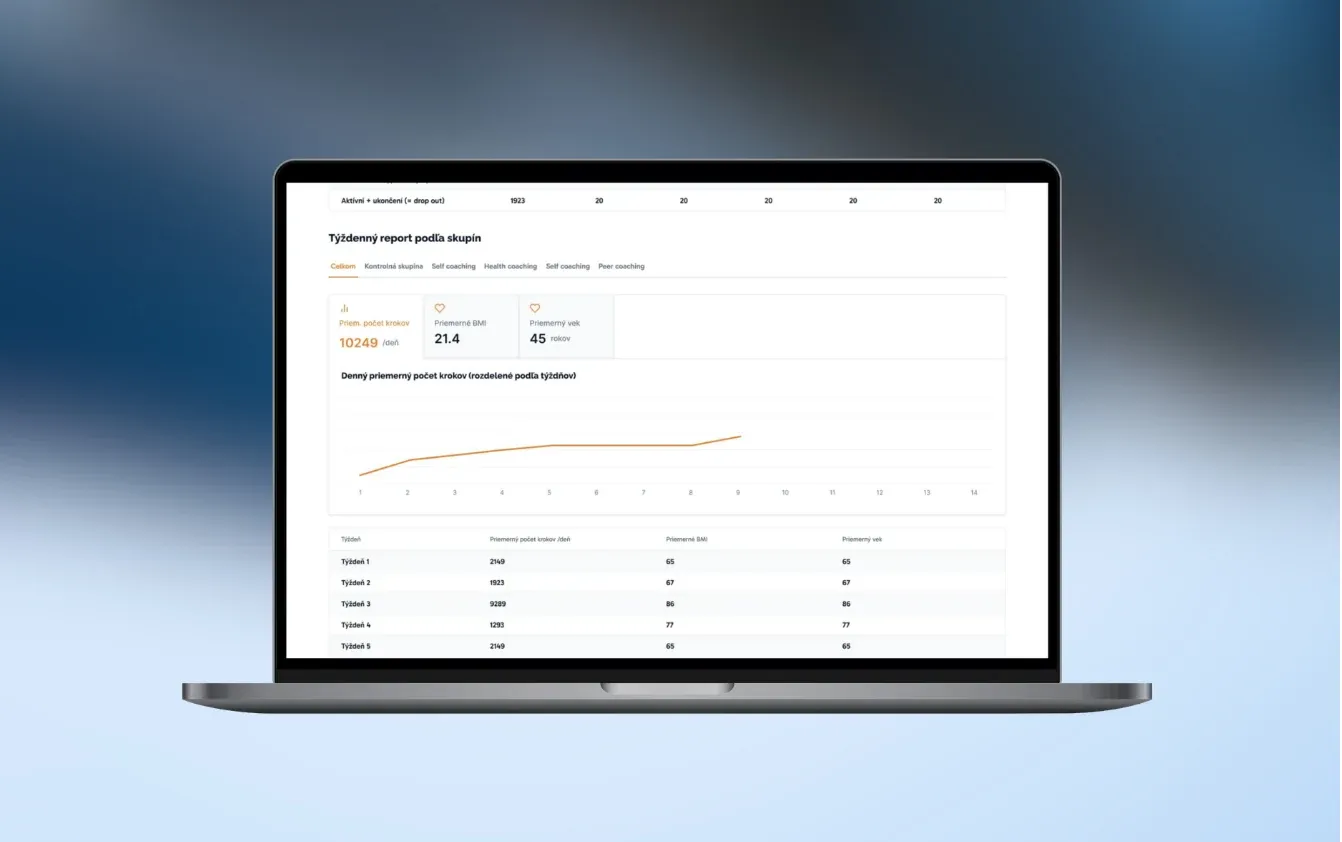
We built a system to track and manage participants in a health and fitness study.
Read the case study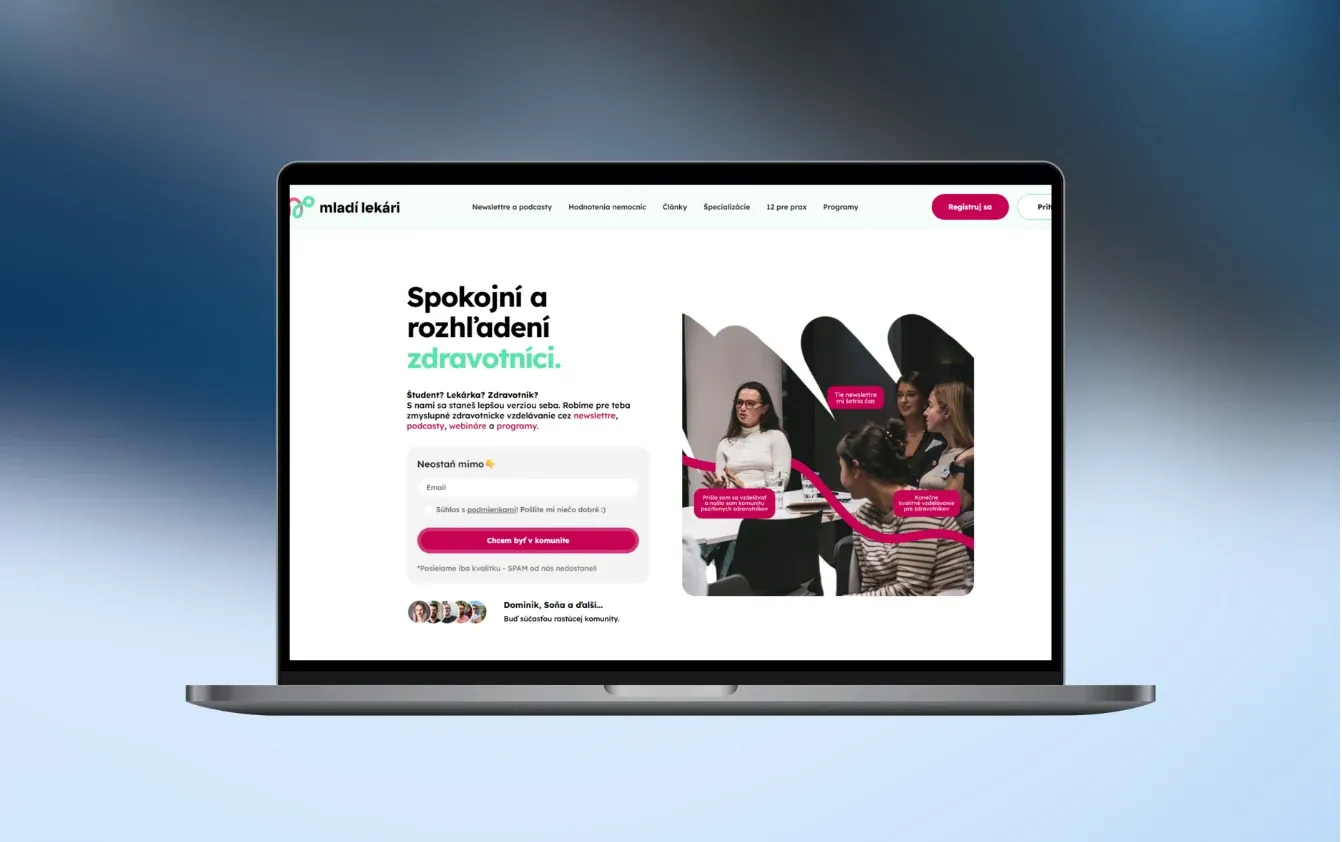
Platform that connects doctors & students with hospitals
Read the case studyYes. We work with healthcare startups and established providers on patient-facing products and internal systems, from MVPs such as Mladilekari.sk to rebuilds such as Novuma’s booking system.
Health data is a special category of personal data under GDPR. We agree with you and your data protection officer what is stored, where it is hosted, who can access it and how long it is kept. Roles, access logs and retention rules are built into the system. We don’t give legal advice, so your advisor confirms the final setup.
Often yes, if the system has an API or a data export. Where systems support health data standards such as HL7 FHIR, we use them. For Zhiva we connected Garmin Connect to bring participants’ activity and health data into the platform.
Yes. We can rebuild or migrate a system that is slow, unreliable or hard to change, as we did with Novuma’s booking and customer portal. We usually move one part at a time, so patients can keep booking throughout.
A focused MVP usually takes 6–12 weeks, depending on integrations and how complex the processes are. The Mladilekari.sk MVP took 6 weeks.
One process, such as online booking with reminders connected to 1–2 systems, costs €5–10k. A patient portal or staff tool with 10+ features costs €10–30k, and larger platforms or replacements of older systems start at €30k. We agree a fixed price after the project workshop, before any build starts.
Yes, for admin topics such as booking, opening hours, preparation before a visit and prices. Medical questions go to staff. An AI voice agent can also take booking calls after hours, and when data must not leave your infrastructure, we use self-hosted models.
You do. At launch you get the code, the repositories and the accounts, and patient data stays in systems you control. We fix bugs free of charge for 3 months, then you can choose monthly support.
Tell us which part of the patient journey takes your staff the most time. We’ll help you decide what a first version should cover, whether you are building something new or updating what you have.

JurajCEO, QikBuild
You leave the call with
Or write to hello@qikbuild.com