
No inquiry without an owner
Inquiries from portals, your website and the phone land in one list, get assigned to an agent and trigger a reminder if nobody replies.
Faster replies
Keep listings, inquiries, tenants and client records in one system
An inquiry arrives through a listing portal, gets forwarded by email, and three days later nobody knows who called the buyer back. Property managers juggle tenant requests, contracts and repairs across spreadsheets and phones. We build systems that keep listings, inquiries, clients, units and repairs in one place and connect to the portals and CRM you already use. AI takes the repetitive parts, such as tidying listing data or sorting incoming requests.
Inquiries from portals, your website and the phone land in one list, get assigned to an agent and trigger a reminder if nobody replies.
Faster replies
A property’s details, photos and status live in one place and go out to your website and to the portals that accept imports, so prices and availability don’t drift apart.
One listing record
Tenants report repairs, upload documents and see the status online. Managers assign contractors and track costs per unit.
Tenant self-service
Viewings, reservations, deposits, mortgage steps and handover follow your process, with the right documents at each stage.
Your workflow
Maintenance fills a property manager’s day. Most requests are simple; the system makes sure none of them get lost.
From the projects we’ve built in this area.
On Mappi, a property portal in Guatemala, agents already had their own tools. Instead of asking them to move, we synced contacts, deals and follow-ups with the CRMs they used. People adopt a new system faster when it works with the tools they already have.
Listings arrive with missing fields, inconsistent room counts and key facts buried in the description. AI is good at filling gaps from the text, standardising fields and flagging contradictions for a person to check. On Mappi we used it to prepare listing data for search and display.
Listing portals differ. Some accept automatic feeds or have an API, others allow only manual uploads or paid integrations. List the portals you actually use and what each one permits. It often shapes the scope more than any feature.
AI can answer “is it still available?” at 10 pm and offer a viewing slot. It shouldn’t negotiate a price, judge a tenant’s application or handle a complaint about a landlord. Draw that line before launch, not after the first awkward call.
Plenty of agencies run well on an off-the-shelf real estate CRM. A custom system pays off when you combine sales with property management, run your own portal or have a process the CRM can’t follow.
| Spreadsheets and email | Real estate CRM | Custom system | |
|---|---|---|---|
| Inquiries tracked and assigned | No | Yes | Yes |
| Ready-made exports to local portals | No | Yes | Partly |
| Tenants and repairs | Partly | Partly | Yes |
| Your own sales stages and documents | Partly | Partly | Yes |
| Your own portal or marketplace | No | No | Yes |
| Cost to start | None | Monthly fee per agent | One-off build price |
| Ready to use | Today | Days | 6 weeks to 3 months |
What we’ve built for clients in this field.
Real estate marketplace and platform · Guatemala
The problem
The company needed better property listings and search, and a better way to store property data.
What we built
What changed: A property platform with structured listings and search, connected to the CRMs agents already use.
A typical timeline. We confirm yours after the project workshop.
Week 1
Project workshopWe follow one inquiry or one repair request from start to finish with your agents or managers, list the portals and tools involved and agree a fixed price.
Weeks 2–3
Properties and contactsProperties, clients and units imported from your spreadsheets or CRM, so every weekly demo runs on your real data.
Weeks 4–7
The first processInquiry handling or repair requests, piloted with one branch or a few buildings.
Launch
Everyone moves overYou own the code, repositories and accounts. We fix bugs for free for 3 months.
Then
Portals, AI and voicePortal exports, listing clean-up with AI or after-hours call handling, added where the pilot shows the need.
Systems we’ve built that are close to this one.
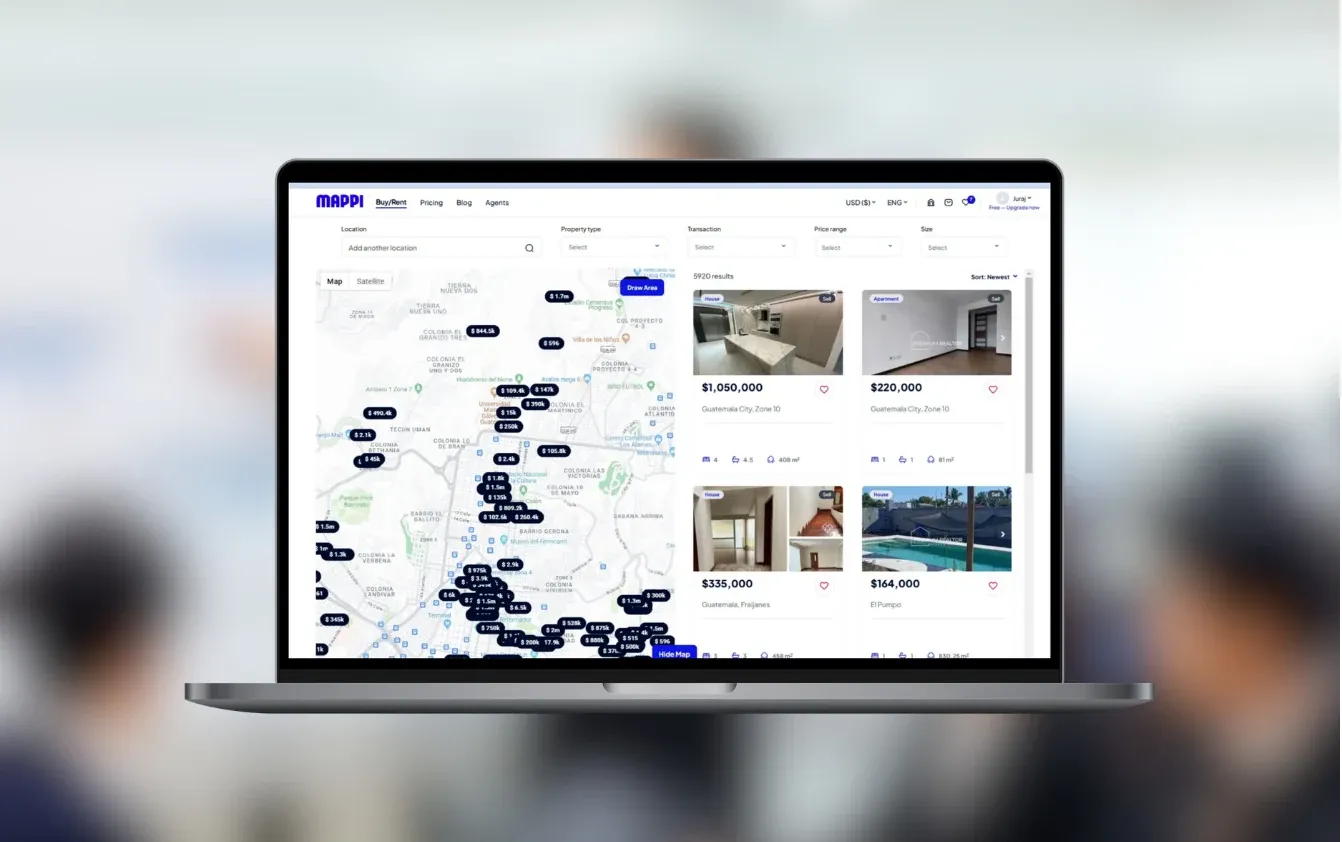
Real estate directory for Guatemala market
Read the case study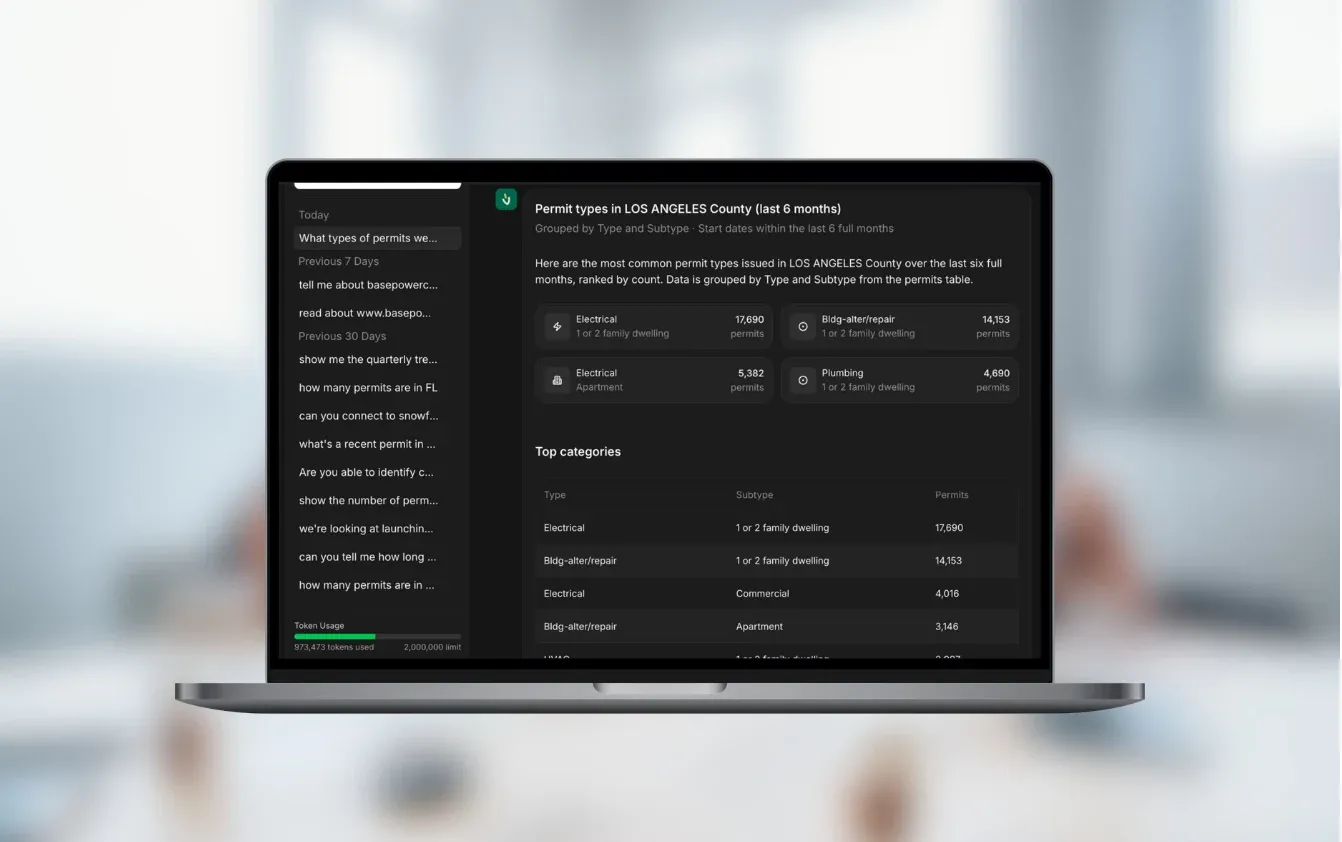
An AI assistant that answers questions about building permits and contractors using current database records.
Read the case studyBoth, and for companies that do both. Agencies usually start with inquiries and listings; property managers start with tenants, contracts and repairs. A first version covers one of these, and the other can follow.
Where the portal or tool allows it, yes. Some portals accept automatic feeds or have an API; others need manual uploads. We check each portal, your CRM, accounting and email tools in the project workshop, before the price is fixed.
One process, such as inquiry handling or repair requests connected to one or two tools, usually costs €5–10k. A system with listings, clients, units and a tenant portal is typically €10–30k. Your own property portal or marketplace with many integrations starts at €30k. We fix the price after the project workshop.
Our past projects reached a first version in 6 weeks to 3 months. We import your existing properties and contacts early, so you test with real data. Portal connections can add time, depending on what each portal allows.
Partly. AI can answer routine questions from the listing data, collect the buyer’s or tenant’s details, offer viewing slots and pass everything else to an agent with a summary. We don’t let it negotiate prices or decide about applicants.
Yes. A voice agent can answer questions about listings, take repair reports, book viewings and pass urgent cases to the person on call. Callers are told they are speaking to an AI assistant, and every call ends up as a summary in your system.
Access is limited by role, so a contractor sees only the job and, if you want, an agent sees only their own clients. We agree retention periods, log access to sensitive records and host data in the EU when required. Your data protection officer or lawyer sets the rules; we build them in.
You do. The code, repositories, accounts and every listing and contact in the database belong to you. We fix bugs for free for 3 months, then offer optional monthly support.
Tell us how one inquiry or one repair request travels through your team today. In 30 minutes we’ll tell you what to fix first and roughly what it would cost.

JurajCEO, QikBuild
You leave the call with
Or write to hello@qikbuild.com